
Quote & underwriting
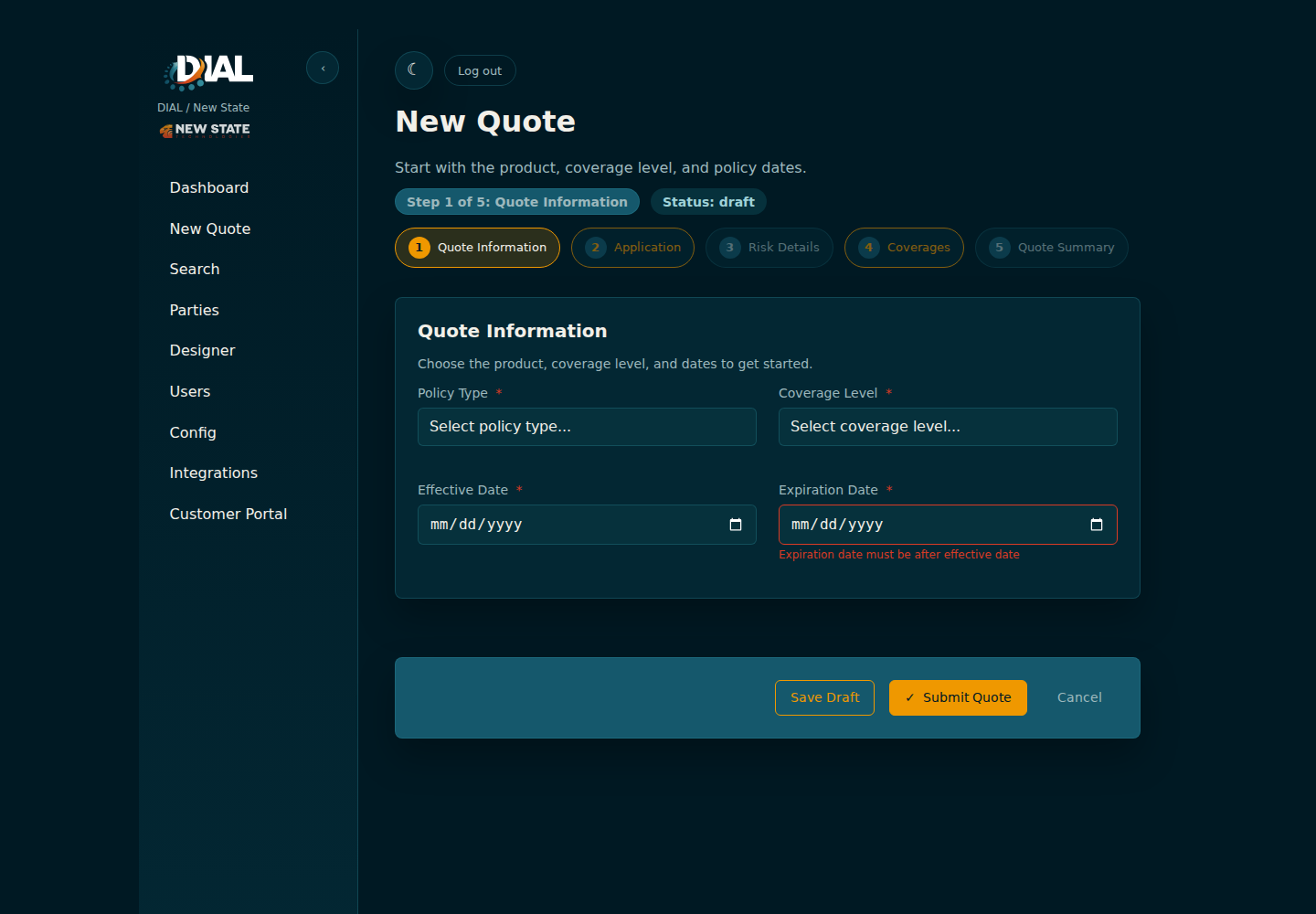
Applicant and risk intake, coverage selection, eligibility checks, premium calculations, quote revisions and underwriting referrals.
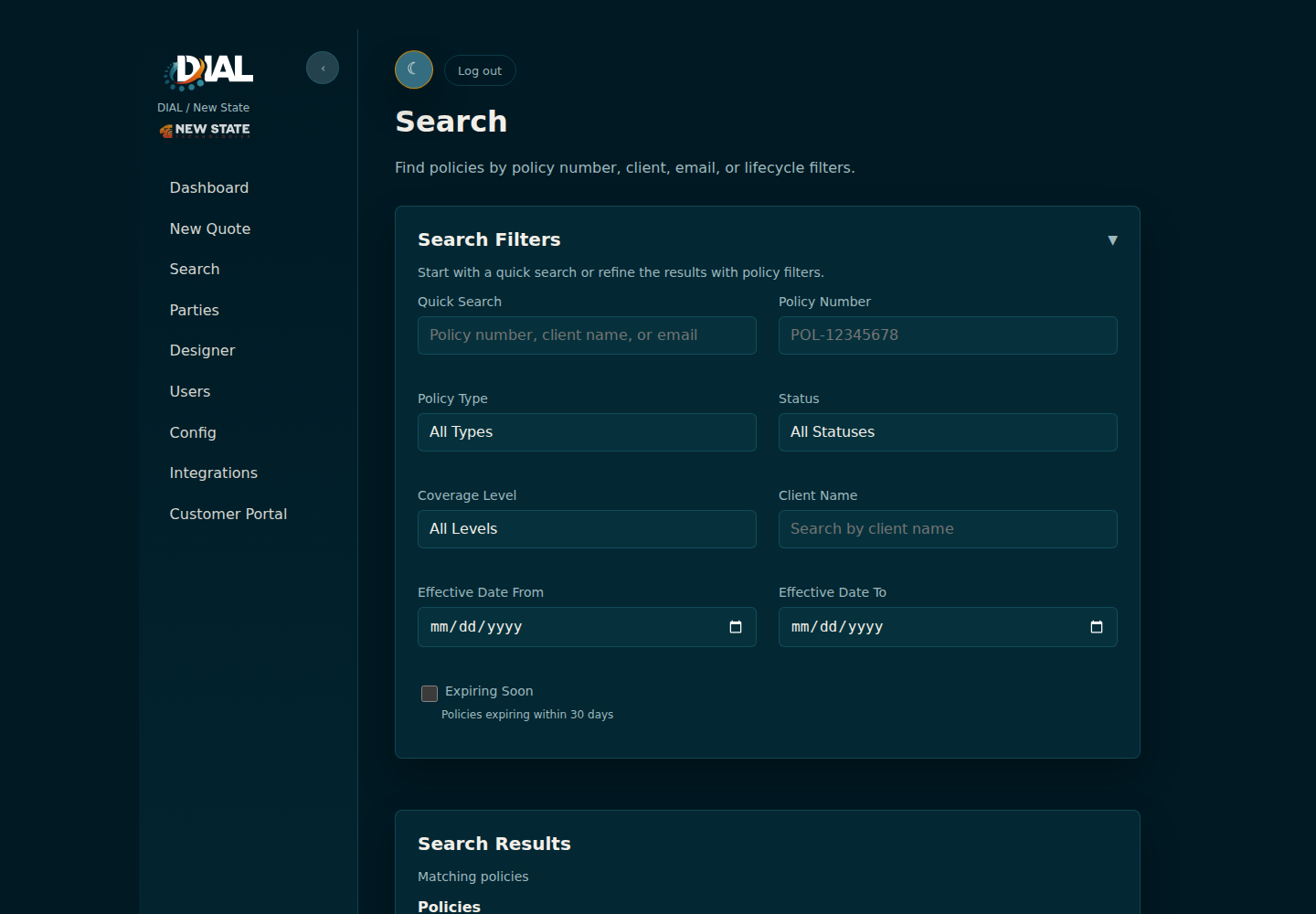
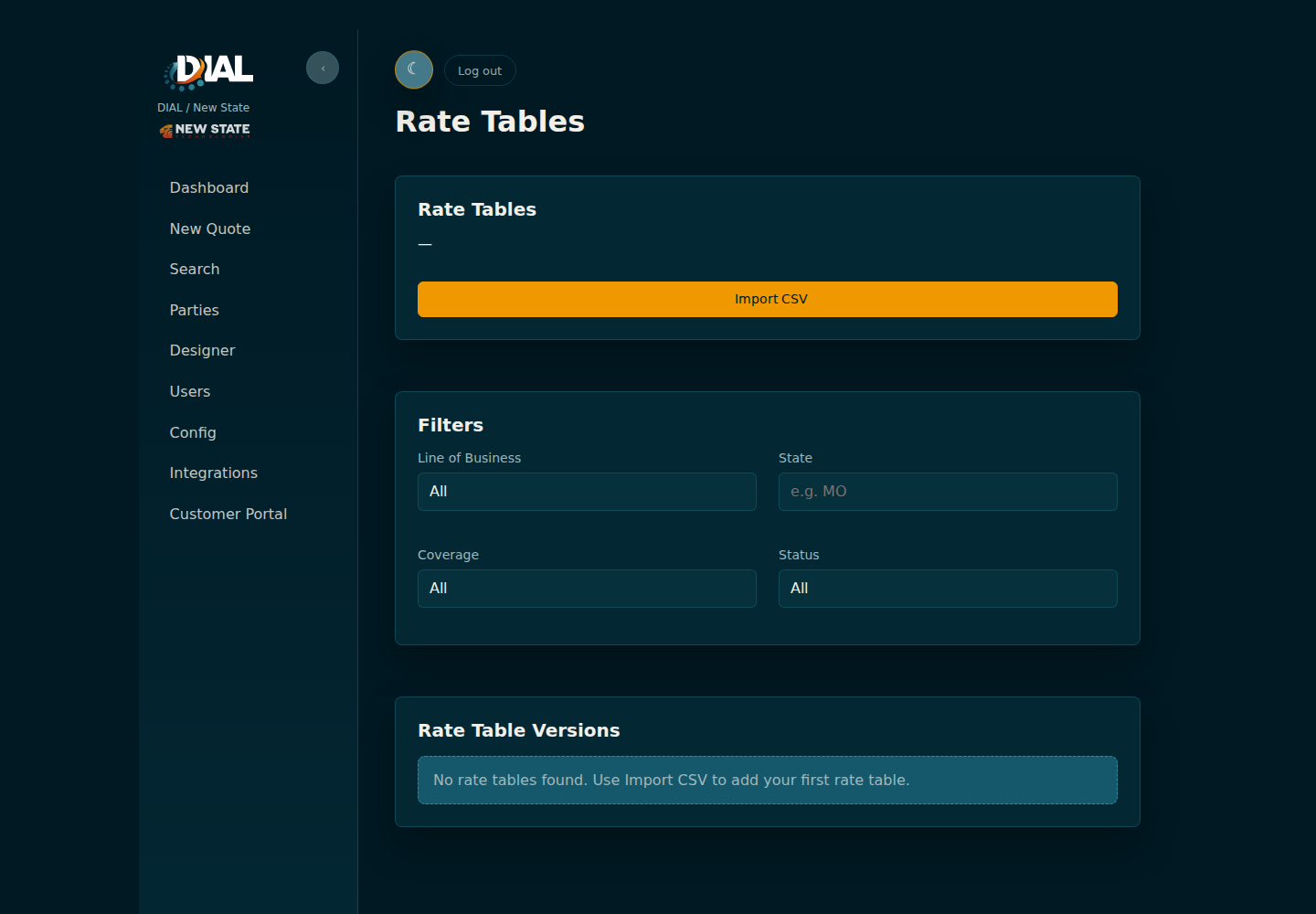
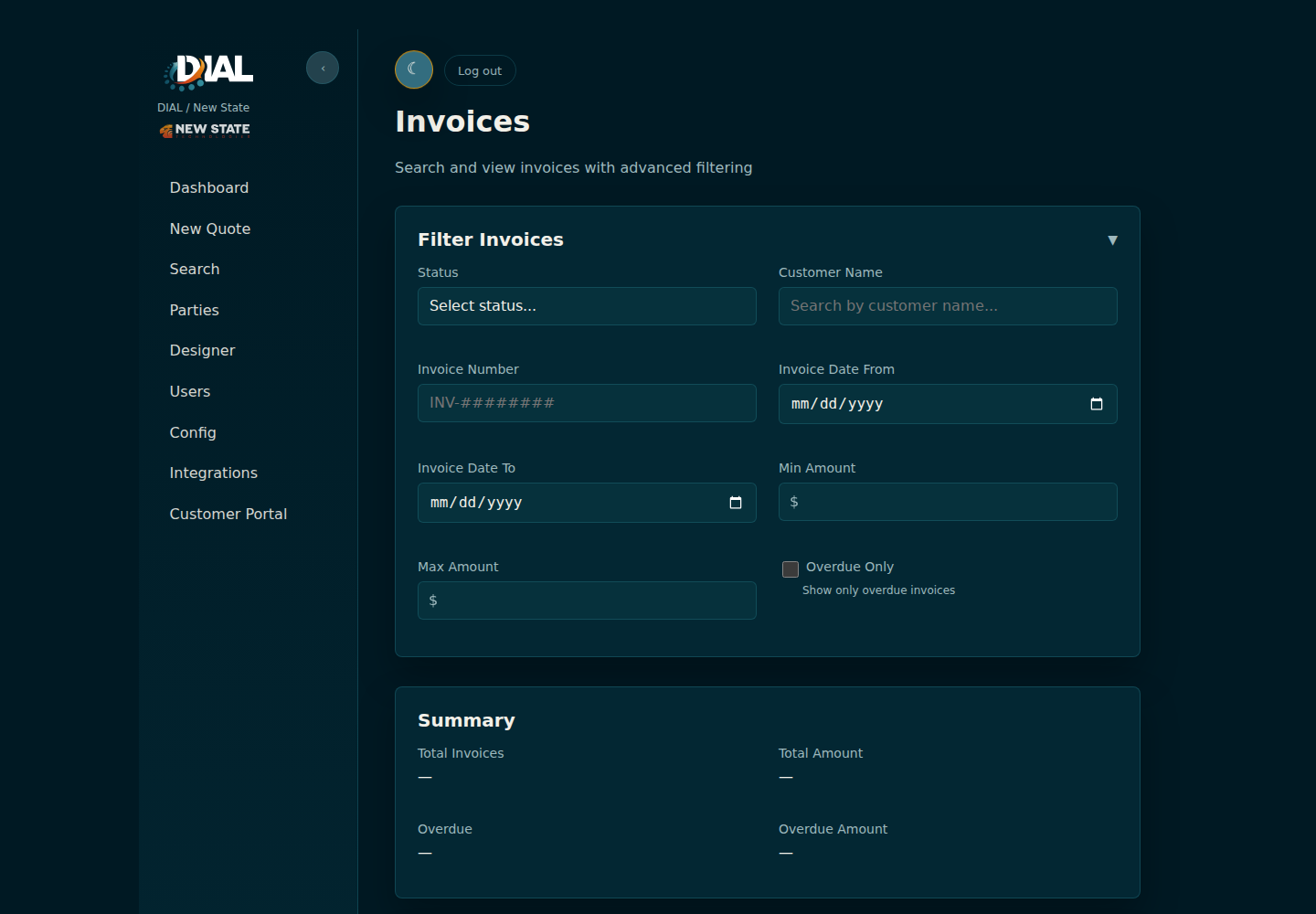
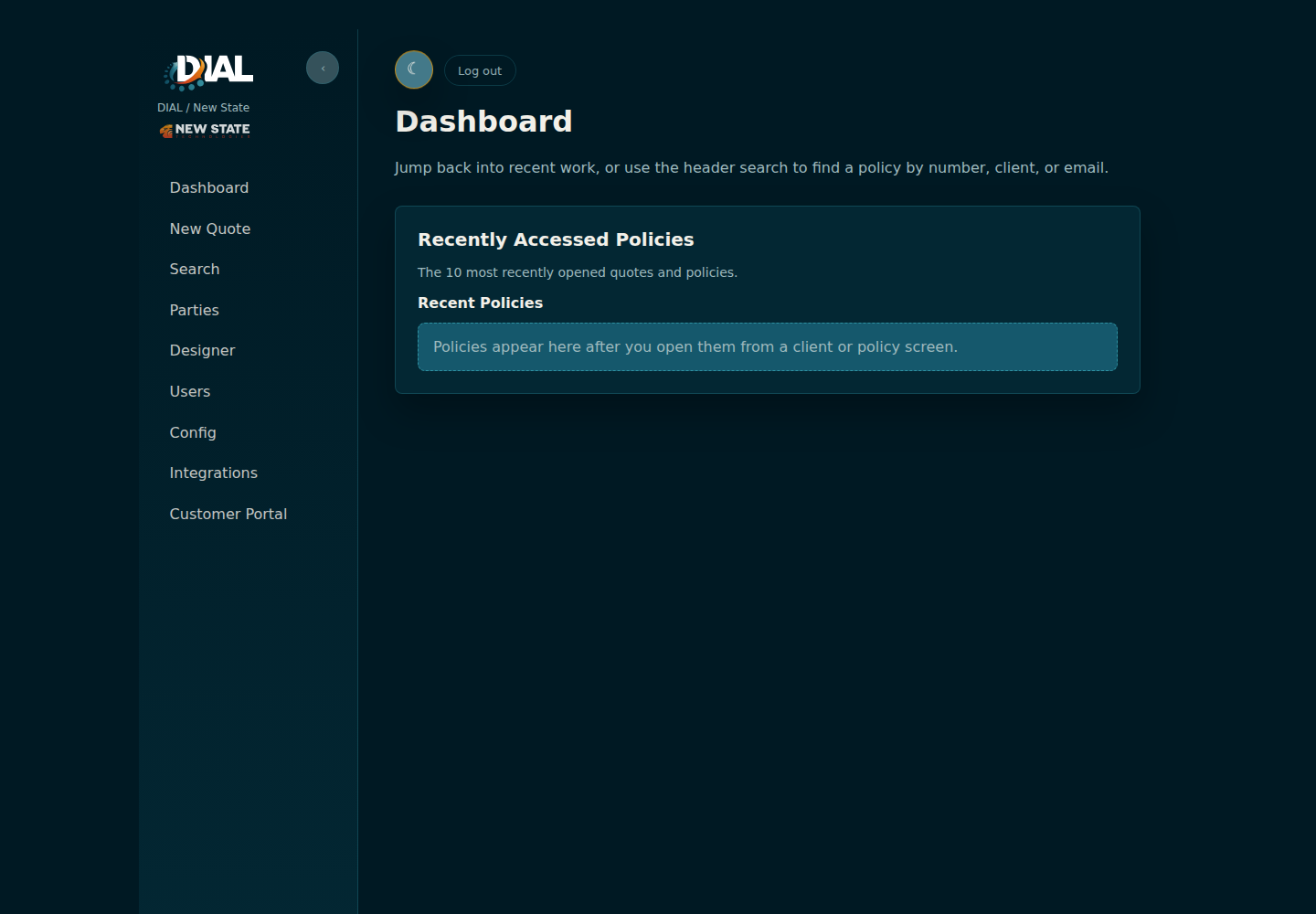
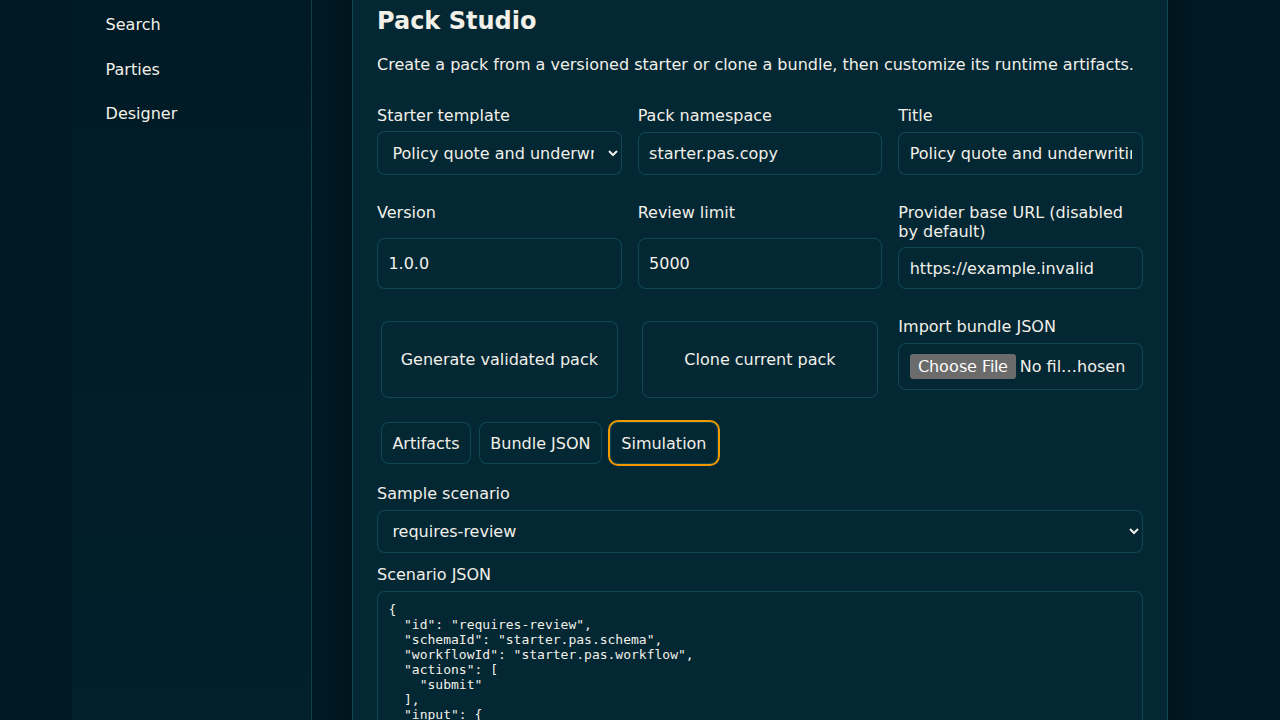
Product preview: the capabilities shown include working screens and APIs alongside JSON-defined contracts and workflows. Declarative specifications are not a claim that every downstream operation or integration has a complete production executor. Screenshots below show the current DIAL application rendered with isolated demonstration fixtures; they do not certify live downstream execution.
Create and manage the policy lifecycle through schema-driven forms, rules, configured transactions, searchable data, and auditable operations.
Applicant and risk intake, coverage selection, eligibility checks, premium calculations, quote revisions and underwriting referrals.
Policy issuance, endorsements, renewals and cancellations with defined transitions and transaction catalogs.
Metadata-configured policy searches, detailed policy pages, reporting catalog, dashboards and configurable page layouts.
Configurable deterministic rating capabilities currently delivered within the PAS pack and shared rules/rate-table infrastructure.
Declarative pricing rulesets evaluate factors and conditions for quotes, endorsements and renewals.
Structured rating dimensions, table validation, and rate-table import/store APIs for factor-based pricing.
Controlled JSON definitions and testable deterministic evaluation rather than opaque compiled rate logic.
Rating is a PAS capability today; this page does not represent it as a separate top-level directory or independently deployed rating pack.
Billing account, invoice and payment screens combine with a working consumer payment path and deterministic calculation helpers. Deep accounting operations remain declared contracts.
Account, invoice, installment and payment-plan schemas, pages and rules; consumer charges persist payment results, receipts and pinned policy evidence.
Declared collections, retry and dunning policies; direct, agency and broker-bill patterns; refund and write-off rules. Scheduled financial execution is not implemented.
Declared subledger, GL export and reconciliation contracts. Payment-provider delegation is implemented; accounting-export execution remains a contract.
Accounting contracts and workflow metadata are included; a full accounting scheduler/general workflow executor is not implied.
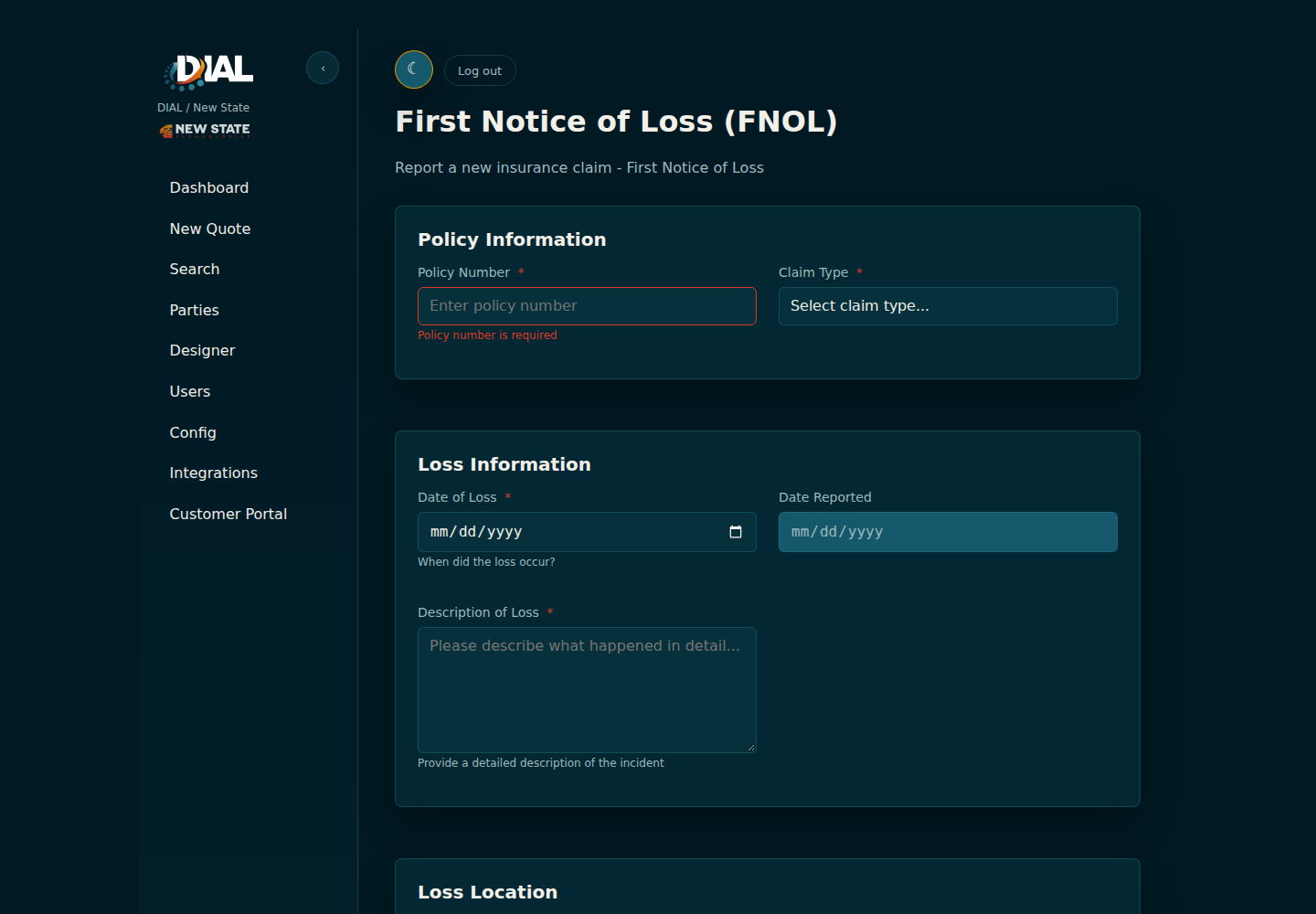
First notice of loss and claims management definitions spanning intake, validation, decision support, payments and controlled lifecycle stages.
Claims, claimant and loss schemas, FNOL intake screens, claim detail pages and input validation.
Coverage and authority definitions plus deterministic helper calculations. These helpers do not automatically invoke approvals or execute claim disbursements.
Declared triage, reserves, vendors, diary, recovery, close/reopen workflows and audit-oriented controls.
Some deep-claims configurations are architectural contracts; claims disbursement and all workflow stages are not presented as fully executable production services.
The insurance domains reuse core DIAL capabilities—rules, pages, provider routing, reporting, shared platform services and integration definitions.
Explore the demonstration or discuss how DIAL can be composed and extended for an insurance implementation.